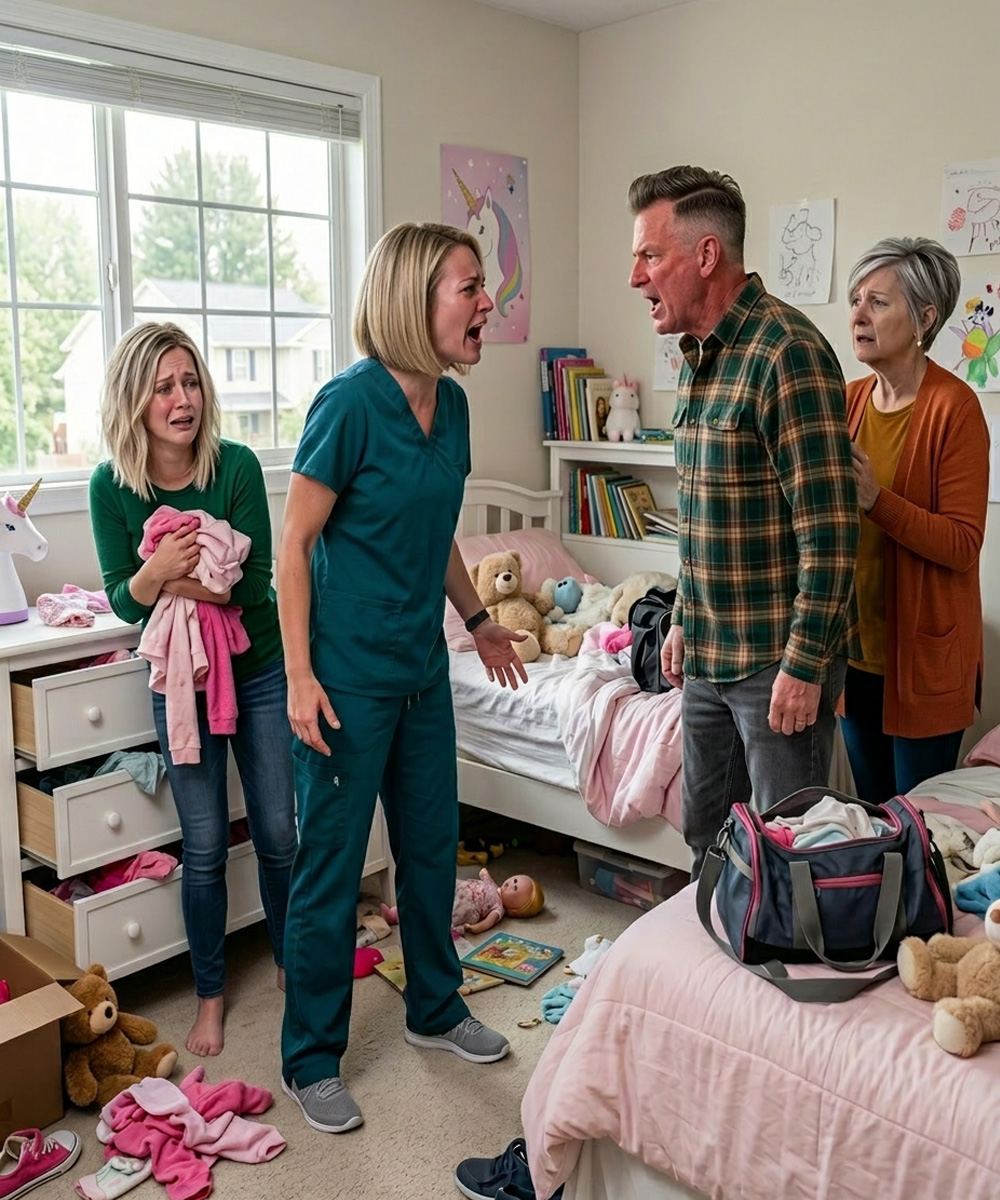
He carried Lily inside just long enough to grab her pink backpack from the porch. Then, without saying a word to anyone, he left.
Emily drove Lily straight home to their small rented apartment in Kettering: a two-bedroom duplex with a rickety mailbox, a narrow kitchen, and a living room that, according to Lily, "looked better when the Christmas lights were up all year round."
It was almost three in the morning when she locked the door. Lily was dozing against her shoulder. Emily sat down on the couch with her instead of forcing her to sleep. She wrapped them both in fleece blankets, turned on the lamp, and waited for Lily's breathing to calm down.
“Did I do something wrong?” Lily finally asked, her voice thick with sleep and fear.
Emily swallowed. "No. Absolutely not."
“Grandma said everyone agreed I should stay somewhere else for a while.”
Emily brushed Lily's tangled hair back from her forehead. "No one can decide whether I'm your mother or not."
Lily nodded, accepting immediately. Children often grasp the truth faster than adults.
By eight-thirty that morning, Emily had accomplished three things with precise efficiency. She had called a family law attorney named Rebecca Sloan, whose number Officer Ramirez had given her. She had notified Lily's school that none of her relatives were authorized to pick her up. And she had updated every emergency contact form she could find.
Rebecca Sloan moved quickly. By noon, Emily was sitting in a downtown office, amid stale coffee and gray carpet, signing the paperwork for an emergency restraining order and temporary no-contact restrictions on Lily.
Rebecca listened, then said, "Your calmness probably saved this case. They admitted intent, took the child away, and interfered with custody. Judges don't like self-appointed family courts."
Emily smiled slightly. The sentence fit perfectly.
The hearing has been set for Monday.
Those four days seemed longer than the entire year they'd spent. Patricia left seven voicemails, ranging from anger to pleas to wounded pride. Ronald sent only one message: You're humiliating this family in public. Vanessa wrote pages and pages about stress and "wanting the best." Emily saved everything, but didn't respond to anyone.
Lily's father, Mark, responded only after being notified. His message read: This seems crazy. Is Lily okay?
Emily replied: Now it is.
At the hearing, the room smelled faintly of paper and old air conditioning. Patricia wore a dark blue suit. Ronald looked tense and collected. Vanessa wiped her eyes. Denise looked distant, pale, and cautious.
The judge began asking questions.
Who decided to take Lily away? Patricia admitted having discussed it beforehand. Who prepared her room? Vanessa admitted having started "organizing" before Emily arrived. Who transported her? Ronald arranged the transportation; Vanessa drove her; Denise completed the journey. Did Emily give her consent? No. Did anyone file for legal custody? No. Did anyone report abuse or danger? No.
By the fifth "no," the outcome was clear.
"You can't take a child away from a custodial parent because you don't approve of their work schedule," the judge stated calmly. "This isn't family support. This is unlawful interference."
Rebecca Sloan didn't need drama. The facts spoke for themselves.
The court issued a restraining order, prohibiting unsupervised contact and requiring that any future visits, if Emily consented, be supervised. The case was also remanded for further consideration.
Patricia looked stunned, as if the law itself had betrayed her.
Outside, Ronald tried again. "Emily, that's enough."
She adjusted her bag and looked at him calmly. "No. You already crossed the line when you decided I was less important than your grade."
Then she walked down the courthouse steps, stepping out into the bright April sunlight, where Rebecca was waiting with the signed warrant.
That evening, Emily and Lily ate canned macaroni at their kitchen table. The hospital had granted Emily three days of emergency leave, and the silence in the two-story apartment felt different: no longer lonely, but simply safe.
Lily colored in silence, then showed them a drawing of their house: crooked windows, a purple door, and two stick figures inside. "This is us," she said.
Emily looked at him. No grandparents. No aunt. No committee. Just home.
Lily tapped the page. "Can we get better locks?"
Emily let out her first genuine laugh in days. "Yes," she said. "Of course we can."
And so they did.
That weekend, she changed the locks, installed cameras, updated the school records again, and placed all the important documents in a fireproof safe. On Monday evening, she returned to the hospital for another shift, still exhausted, but no longer uncertain about the world she was protecting.
Some people believed that motherhood meant endless sacrifice, silently absorbing pain because it came from familiar faces.
Emily knew now.
She had remained calm because, according to their version of events, panic would have weakened her. Calm, however, had made her dangerous when faced with the truth.