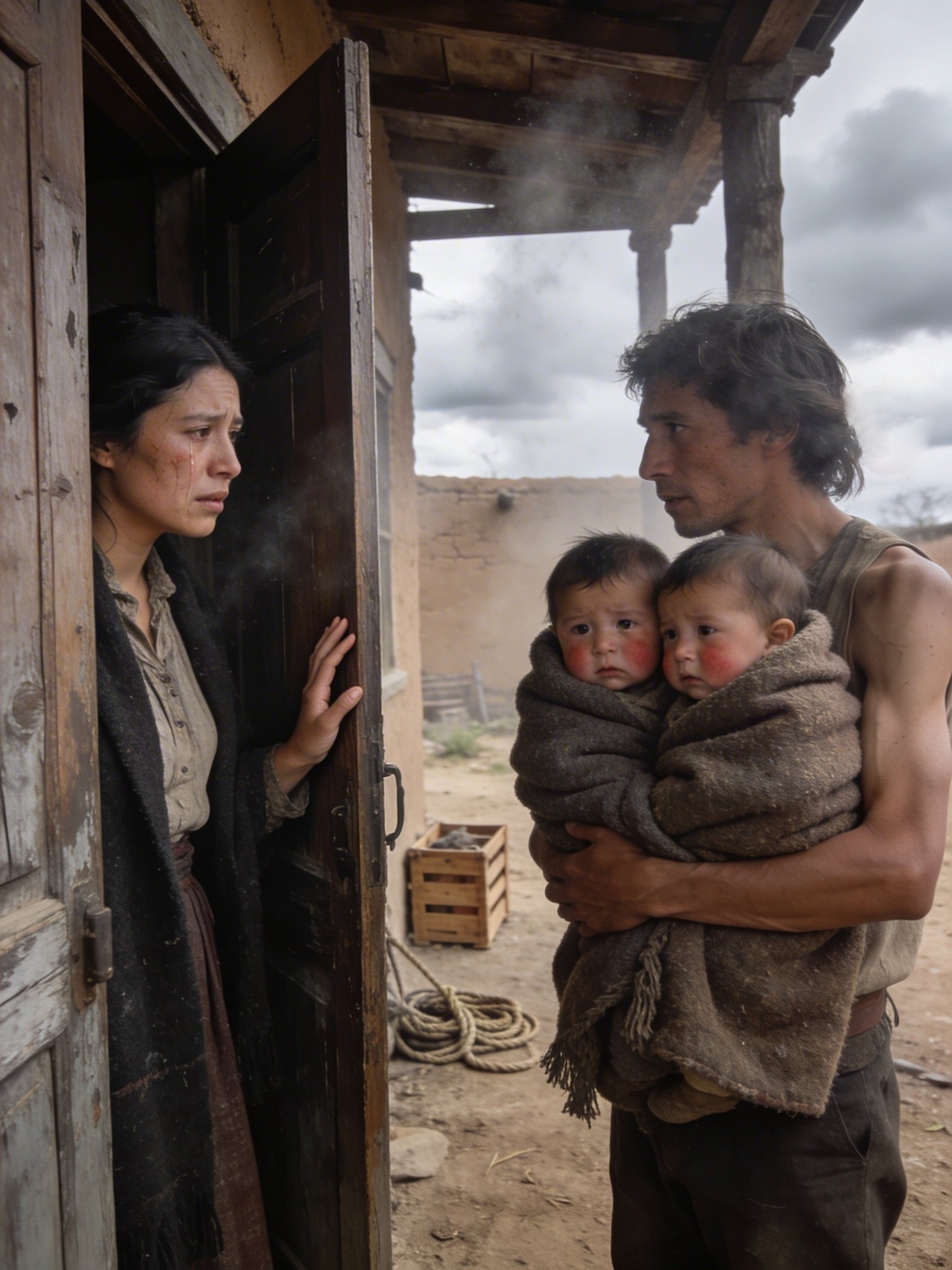
That same afternoon, she settled into the foreman's old cottage behind the stable. It was modest, but sturdy. Elena brought with her blankets, an old cradle that had belonged to a forgotten nephew, and goat's milk for the twins.
From the very beginning, something changed on the estate.
Tomás worked as if he wanted to repay every tortilla with his sweat. He rose before dawn, repaired the fences, cleaned the ditches, built a new chicken coop, weeded the garden, and tended the cattle. Elena, accustomed to struggling alone, soon discovered the strange relief of having someone by her side without having to explain every difficulty.
While Tomás worked to bring life back to the countryside, Elena discovered she had an unexpected talent with children.
Mateo and Gael calmed down in her arms. They fell asleep lulled by the songs their mother sang to them as a child. When they cried, she simply rocked them against her chest to soothe them. Tomás watched her from the doorway for many afternoons, feeling something new and frightening stirring in his heart.
Hope.
Weeks turned into months.
The garden thrived. The cows grew fat. The barn roof stopped leaking. On the table in front of the stove, there was no longer just one plate, but three, and then four when the twins began eating their baby food amidst laughter and mess.
Elena discovered that she enjoyed listening to Tomás talk about his day while they ate dinner.
Tomás realized he was eagerly awaiting the moment when she would sit next to him in the hallway as evening fell, as the sky above Zacatecas turned orange.
“Now these lands really seem alive,” he said one afternoon, wiping the sweat from his forehead.
“Now we two will take care of it,” Elena corrected her, handing her a glass of cold water.
Tomás smiled. It was a strange smile, still awkward, as if he wasn't used to it.
—It's been a long time since I felt like I belonged anywhere.
Elena looked down, but didn't contradict him.
The neighbors began to notice the obvious.
Doña Candelaria, whose tongue was quicker than pity, arrived one day with cornbread and a suspicious smile.
—So the widower remained — he observed, looking at Tomás from the kitchen.
“She stayed at work,” Elena answered too quickly.
—Of course. And it's also very beautiful, in case no one has already mentioned it.
A blush immediately rose to her neck.
—Don't talk nonsense, godmother.
The old woman burst out laughing.
—My daughter, I've seen so many love stories begin. Almost all of them begin with the statement that it's nothing.
Elena spent that night sleepless, staring at the ceiling.
She knew what she felt, but she was afraid to name it. She was afraid of ruining the peace they'd built. She was afraid that Tomás didn't feel the same. She was afraid of being alone again, but now with something more to lose.
Even Tomás couldn't sleep.
From his small room, with Mateo and Gael breathing softly beside him, he thought of Elena combing her hair into a simple bun, of her strong hands, of the way she spoke to the animals and children: firmly and tenderly. He had sworn he wouldn't feel so soon after burying his wife, but the heart doesn't ask permission.
Autumn arrived with cool mornings and a golden light on the wheat fields.
One evening, while they were washing the dishes together and the twins were finally asleep, Elena dared to ask:
—Have you thought about how long you intend to stay here?
Tomás stopped drying the vase.
—Do you want me to go?
"No." He looked up immediately. "That's not the point. I just... don't want you to feel obligated."
Tomás took a step towards her.
—I don't want to leave, Elena. Unless you ask me to.
The silence between the two became thick, vibrant.
"Elena," he said, his voice lowering. "When I came here, I was already dead inside. I only continued for my children. But you... you gave me back something I thought I'd lost."
She felt like she was short of breath.
—Tomás, I…