"I cultivated this land with my own hands. I have no intention of losing it just because some men don't like a woman owning property. And yes, I will marry Tomás. Not for convenience. For love. If the law requires a husband who respects my rights, let's be clear: he's not coming to take anything from me. He's coming to build something with me."
When it was all over, there wasn't a single sound to be heard in the room.
The judge slowly cleaned his glasses, thought for a moment and said:
—I will not initiate proceedings. The property is recognized as belonging to Miss Elena Robles and, after her marriage, to the community of property she freely establishes. This court will not protect ambitions disguised as family guardianship.
Eusebio turned pale.
Elena burst into tears.
Tomás held her in his arms as they left the courthouse, surrounded by neighbors who applauded them and wished them well.
Three days later, under a clear blue sky and in the small village chapel, Elena and Tomás got married.
She wore a simple dress that had belonged to her mother. He wore a borrowed suit and the radiant smile of a man who had finally found his place in the world. Mateo and Gael, now plump and strong, were in Doña Candelaria's arms, babbling as if they knew something important was happening.
When the priest asked them to take their vows, Thomas took Elena's hands and said:
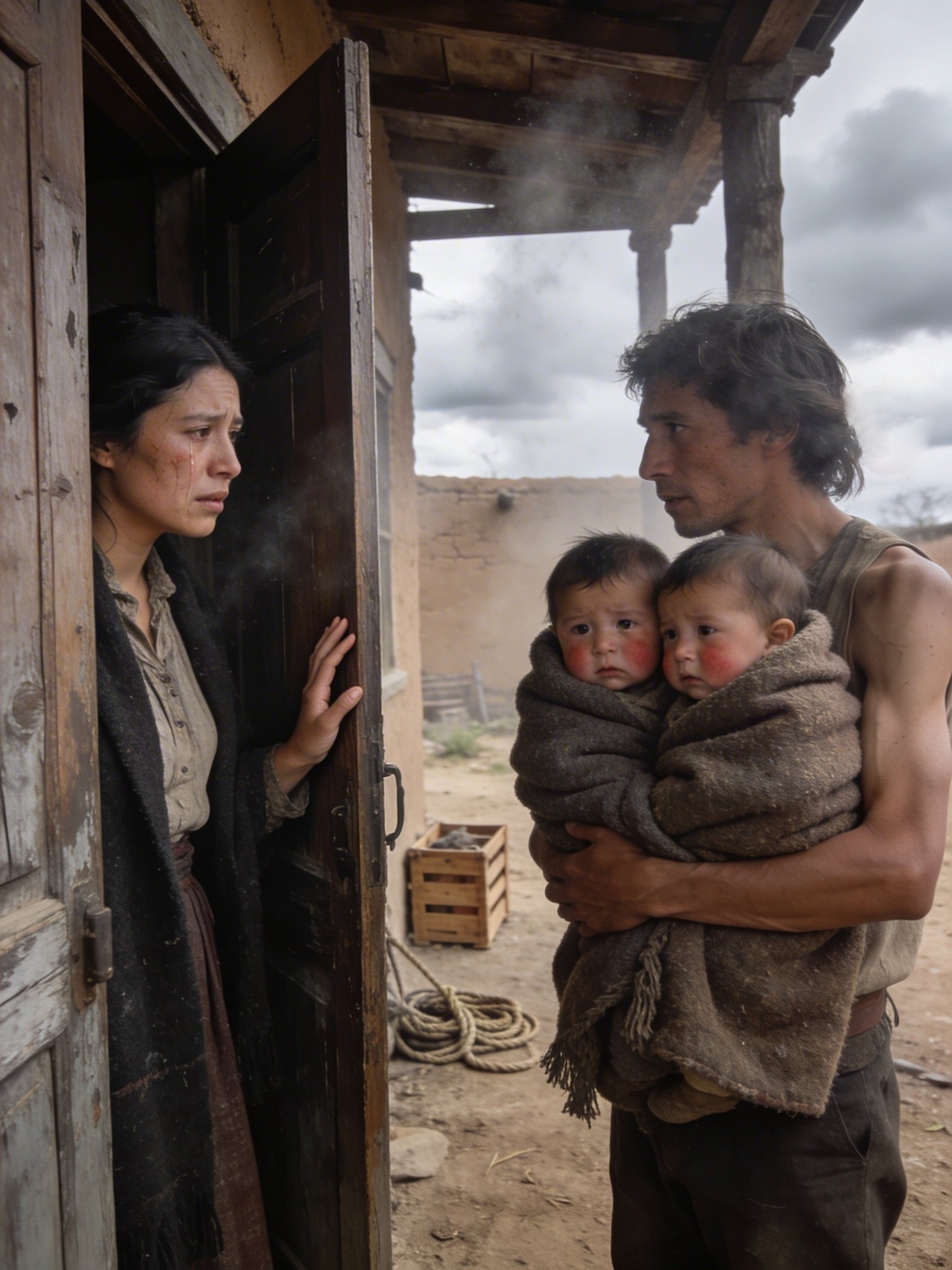
—The night I knocked on your door, I was lost. You offered me shelter, but you gave me so much more. You gave me back hope, dignity, and the joy of waking up. I promise to dedicate my entire life to honoring what you have given me today.
Elena cried while smiling.
—And you taught me that asking for help is not a sign of weakness, and that love can arrive dressed in tiredness, with two children in its arms, and still be the greatest gift God can send.
They kissed as the bells rang and the neighbors cheered.
The party took place at the ranch, with violin and guitar music, pots of mole, pulque bread, and children running among the chickens.
That night, when they were finally alone in the corridor, gazing at the stars above the peaceful countryside, Elena snuggled against Tomás's shoulder.
"Do you think we'll be happy?" he asked.
He smiled and kissed her forehead.
—We already are.
Then she took his hand and slowly guided it towards her belly.
—And there will be more of us.
It took Tomás a second to understand.
When he did, he let out a choked laugh and hugged her so tightly that Elena felt like her heart was about to leap out of her chest.
-Truly?
-Truly.
Five years later, the ranch awoke to the sound of children's voices instead of silence.
Mateo and Gael ran among the chickens. Helena, the daughter born from that second beginning, collected eggs in an apron too big for her. Another, younger child slept in a hammock near the kitchen. The land had grown, the chicken coops were full, the garden was overflowing with life, and the house was no longer lonely.
Sometimes, at dusk, Elena and Tomás would sit in the hallway with a cup of coffee and watch their children play.
"Do you regret knocking on that door?" he once asked.
Tomás looked at her, then at the field, the house, the children, the woman next to him.
"Never," he replied. "That night I thought I was seeking refuge. But in reality I was finding my home."
Elena rested her head on his shoulder.
And as the wind gently caressed the wheat fields and the laughter of children filled the air, they both knew that some doors aren't just opened to let someone in from the cold.
Sometimes they open to welcome all of life.