—Don't tell me you're going to devote yourself to the theater now.
—No. I'll say out loud what we've all been thinking for years. That you control your son, humiliate anyone you don't consider your equal, and turn every encounter into a test of obedience.
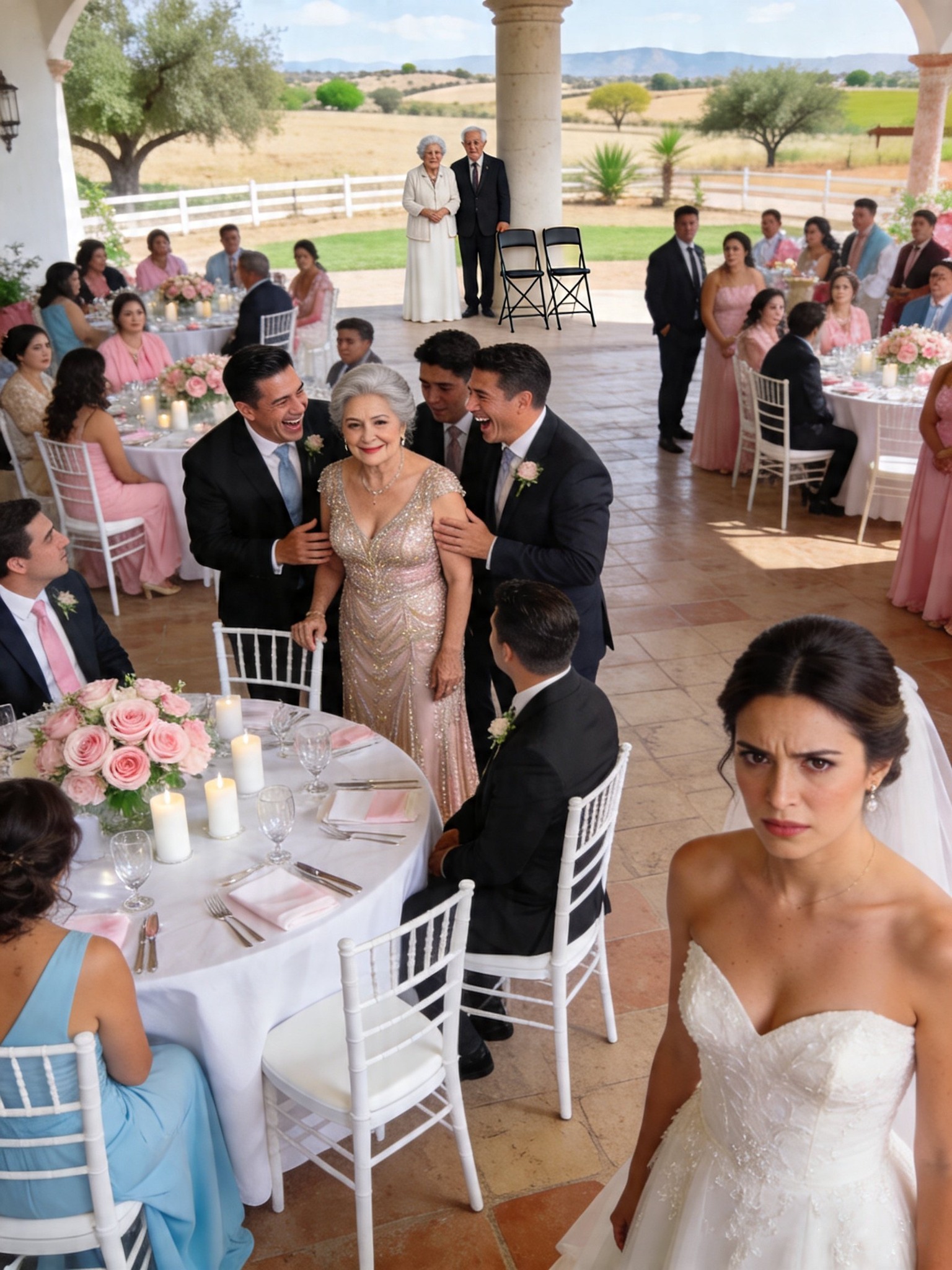
Several people turned around. Two of Diego's cousins looked down. His younger sister, Daniela, was crying silently near the counter.
Teresa continued:
—And you, Diego, are just as responsible. Because growing up with a mother like that explains a lot, but it doesn't justify it when you're already thirty-five.
He tried to answer, but no sound came out.
For the first time since it all began, I saw real cracks in that immaculate family facade.
The event organizer approached with great attention.
“I need to know what we are going to do about the service,” he asked.
I stood up. My dress felt heavier than ever.
"Pay the agreed-upon price," I said. "The food is served. Guests who wish to stay for lunch may do so. No one is to blame for this except the person who caused it."
Roberto opened his eyes wide.
—Are you planning to cancel the wedding and use the hall for the banquet?
—I don't want the people who traveled and the workers who have been here since seven in the morning to pay for his arrogance.
It was Mariana who pulled the emergency envelope from the bag where we kept our payments and tips. I had access to the joint bank account for the wedding because I had hired most of the vendors. I immediately confirmed with the coordinator that the remaining balance would be paid that same afternoon. She nodded, relieved.
This changed the atmosphere. The situation was still dire, but no longer chaotic. The waiters cautiously resumed service. Some began to leave, uneasy. Others stayed. Not out of morbid curiosity, but out of a sense of closeness to my parents and me.
My aunt Veronica made a decision I'll never forget. She stepped onto the small platform where the mariachi band was playing that evening and said:
—Since the wedding has been annulled, I propose something better: let's sit with whoever we want and eat in peace, without having to put up with anyone disrespecting us.
Half the room laughed nervously. The other half, to my surprise, applauded. It wasn't a standing ovation, just a brief, awkward, but sincere round of applause from those who understand that someone has just set a bar that many others have never dared to cross.
Patricia stormed off. Roberto followed her. Diego stood still for a few more minutes, watching his personal vision of a perfect day crumble before his eyes. Then he approached her one last time.
—Once you walk out that door, you can never go back.
I thought of all the brides who had been raised fearful of that phrase. I thought of the lost money, the photos that would never exist, the people who would talk about it for months. I thought of my mother carefully wiping away her tears so as not to ruin the makeup she'd done on me. I thought of my father, who had taught me from a young age that poverty doesn't take away dignity, but cowardice does.
“I hope so,” I replied.
I took off my engagement ring and placed it in the palm of her hand.
I didn't tremble.
I left the living room with my parents, Mariana, and my aunts and uncles. In the garden, the Guadalajara spring air smelled of damp earth and orange blossoms. The sun was beginning to set. I sat for a moment on the edge of a fountain and, for the first time all day, I allowed myself to cry. I wasn't crying because I had lost Diego. I was crying for all the signs I had turned into excuses. For all the times I had mistaken patience for love and adaptation for humiliation.
The next few months were difficult, but clean.
I received calls from unknown numbers, incredibly long messages from Diego, an attempt at a "civil" meeting that I refused, and absurd rumors about my supposedly unstable character. Some truths also surfaced. Daniela, Diego's sister, wrote to apologize for not intervening sooner. She told me that Patricia had been manipulating family decisions for years, ridiculing her partners, and controlling accounts and contacts. Teresa confirmed everything. Even Roberto, weeks later, sent me a brief message admitting that his wife "had handled the situation poorly," which, in his language, almost amounted to a confession.
I started therapy in Mexico City. After a while, I started sleeping well again. I reconnected with friends I'd neglected during the relationship. I resumed a professional project I'd put on hold to accommodate the Mendoza family's social commitments. And one Saturday in the fall, I took my parents to lunch in Puebla with the money I'd raised by selling some unused reservations from our honeymoon. My mother laughed heartily for the first time when she remembered the disaster with the flower arrangements.
A year later, when someone asked me if I regretted calling off my wedding in front of everyone, I gave the only honest answer:
—I would have regretted celebrating it.
Because that afternoon I didn't destroy a microphone. I destroyed a lie carefully decorated with white flowers, expensive protocols, and rehearsed smiles.
And in doing so, I saved the life I was about to choose.