A moment later, she reached into her bag and pulled out a photograph of a young boy sitting in a hospital bed, his expression pale but serene, and said, "This is your grandson, Oliver... he needs help."
It was then that the truth was fully revealed, not through what he said, but through what he chose to show.
“You want me to take a test,” I said in a firm voice.
My mother's expression softened, as if relieved that I understood, and she replied, "We want to be a family again."
“No,” I replied, meeting his gaze, “you want something from me.”
The change in the room was immediate, subtle but undeniable, as if a script had been interrupted halfway.
The Truth They Avoided
When the conversation moved to the priest's office, it became clear that the meeting had not been spontaneous, because the documents had already been exchanged and the agreements discussed in private before they even crossed the threshold of the church.
The language used in those documents described me as someone who had been "removed from home during a difficult time," a phrase so carefully crafted that it erased the reality of what had actually happened, replacing it with something distant and almost innocuous.
The priest, who had always exercised a calm authority that did not require raising his voice, asked calmly, "Why was the whole story not included in your request?"
No one answered, because the omission had not been accidental.
It had been a deliberate act.
They had chosen a place where forgiveness was taken for granted, where saying no could seem like a lack of character rather than an act of self-respect, and in doing so they had revealed that it was not about re-establishing a bond, but about exercising bargaining power.
A choice that was mine.
I consented to the medical test, not for their sake, but for the sake of the child, whose situation had nothing to do with the decisions made long before his birth, and I made it clear that my consent was limited to that single act.
“I will help where I can,” I said, “but I will not pretend that the situation is different than it is.”
The results came back within a few days and showed that I wasn't a suitable candidate, not even close enough for alternative options, and when my mother called to tell me the news, I let the call go unanswered.
Her message didn't mention the baby in the first place, nor did it acknowledge the weight of what had been asked of me, but instead focused on the disappointment and the idea that things might have turned out differently if I had stayed connected to them, as if the past had been something I had chosen rather than something I had endured.
That message clarified everything like no other could have.
What Belonging Really Means
Weeks later, I silently attended the child's memorial service, staying in the back where I could go unnoticed, because he deserved to be remembered for who he was, not for the circumstances that had brought us together.
Afterward, my sister approached me alone, her composure finally giving way to something more sincere than she had ever shown before, and said softly, "I should have stayed with you that day... but I didn't."
There was no attempt to justify it, no attempt to reshape it into something easier to accept, and for the first time I saw not only who she had been, but also who she might have been if things had turned out differently.
I nodded once, not forgiving, not reopening doors that had long been closed, but acknowledging that the truth, even when it comes late, still has meaning.
Then I turned and walked away, because certain distances are not meant to be traveled again.
They had believed that only time would mend what had been broken, that returning with the right words would allow them to recover something they had let go, but they had not understood that belonging is not created by blood or memories alone, and that a home is not something you can walk away from and then return to as if it had remained unchanged.
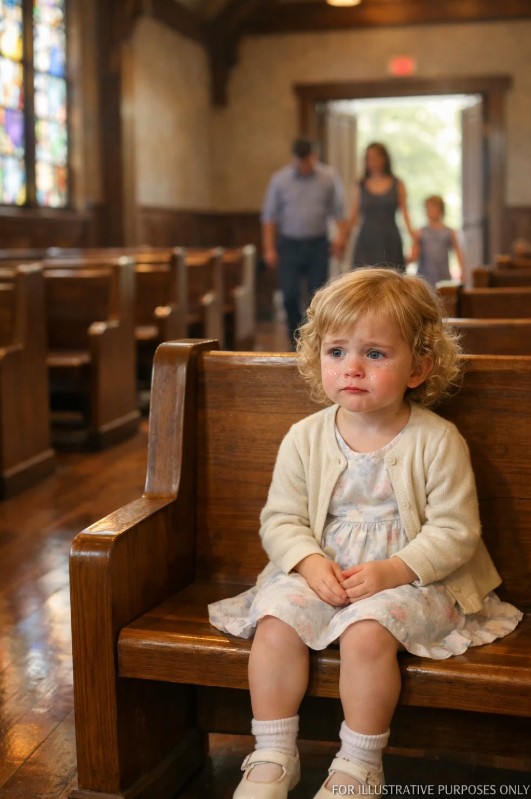
When they came back for me, I was no longer sitting on that bench where they had left me, because someone else had already taken me by the hand and shown me how to build a life that did not depend on their return.
To learn more, see the next page.