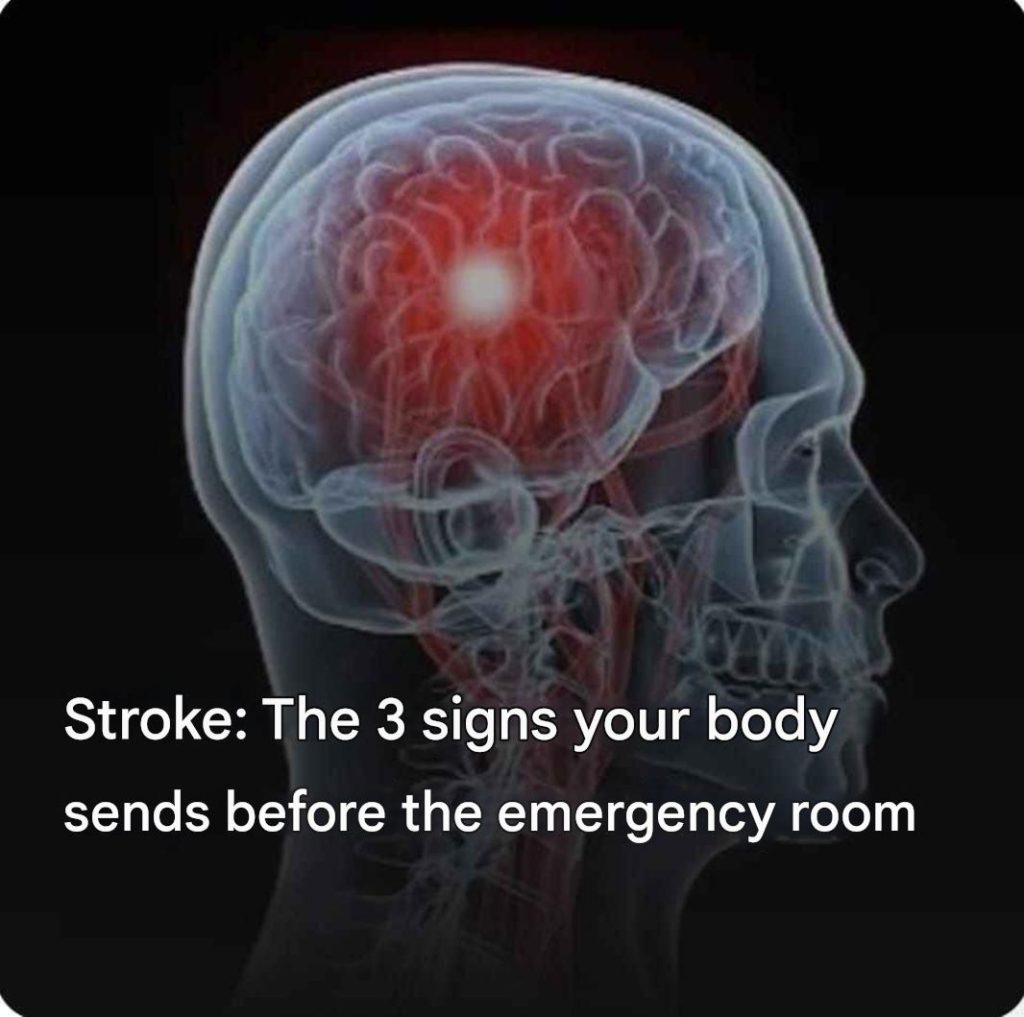
The body often sends signals before a stroke. Many people ignore them or mistake them for a simple feeling of illness.
However, these warning signs can allow for rapid intervention and limit long-term effects. Three signs are common. They appear suddenly and should raise immediate concern.
A stroke occurs when blood flow to the brain is blocked or when a blood vessel ruptures. The brain then lacks oxygen.
The cells begin to suffer within minutes. Every minute without treatment increases the risk of serious after-effects.
Recognizing the signals allows you to act quickly. Speed makes all the difference. The body doesn’t always give long-term warnings, but it provides clear clues at the critical moment.
A face, an arm, and a word that suddenly change
The first sign often affects the face. Part of the face may sag for no apparent reason. The mouth becomes asymmetrical. The person can no longer smile normally. This change appears suddenly; it does not develop gradually.
The second sign concerns the arm. Sudden weakness may affect one side of the body. The person is no longer able to raise one arm properly.
She drops objects without understanding why. This loss of strength occurs without any particular pain in some cases.
The third sign affects speech. Words become difficult to articulate. The person speaks incoherently, mixing up syllables or struggling to find words. Those around them quickly notice this change.
These three signals can appear together or separately. Their common characteristic is their abruptness. Nothing develops gradually. Everything changes in a matter of seconds or minutes.
In this case, the reaction must be immediate. Emergency services must be called without delay. The slightest delay reduces the chances of recovery. The brain remains highly sensitive to oxygen deprivation.
Other symptoms that should raise immediate alarm
Although the three main signs are predominant, other symptoms may appear. A sudden loss of vision may affect one or both eyes. The person experiences blurred vision or complete blindness for a few moments.
An intense and unusual headache can also occur. This type of pain appears suddenly. It doesn’t resemble a classic migraine. It may be accompanied by nausea or vomiting.
Balance problems are another common sign. The person loses their balance for no apparent reason. They walk unsteadily or fall easily. They may also experience sudden dizziness.
In some cases, mental confusion develops. The person no longer understands their surroundings. They react slowly to simple questions. This change often worries those around them.
These symptoms may last a few minutes or persist. Even if they disappear quickly, they should be taken seriously.
They can signal a transient ischemic attack (TIA), often called a mini-stroke. This type of episode increases the risk of a more serious stroke in the following hours or days.
Risk factors also play a role. High blood pressure, smoking, diabetes, and high cholesterol increase the likelihood of a stroke. Stress and a sedentary lifestyle also worsen the situation.
Faced with these signs, a simple rule applies: Never wait. Never downplay the symptoms. Every minute counts to protect the brain and limit the damage.
Recognizing these signs can save lives. The body often speaks without warning for long. Knowing how to listen to it changes the course of treatment.