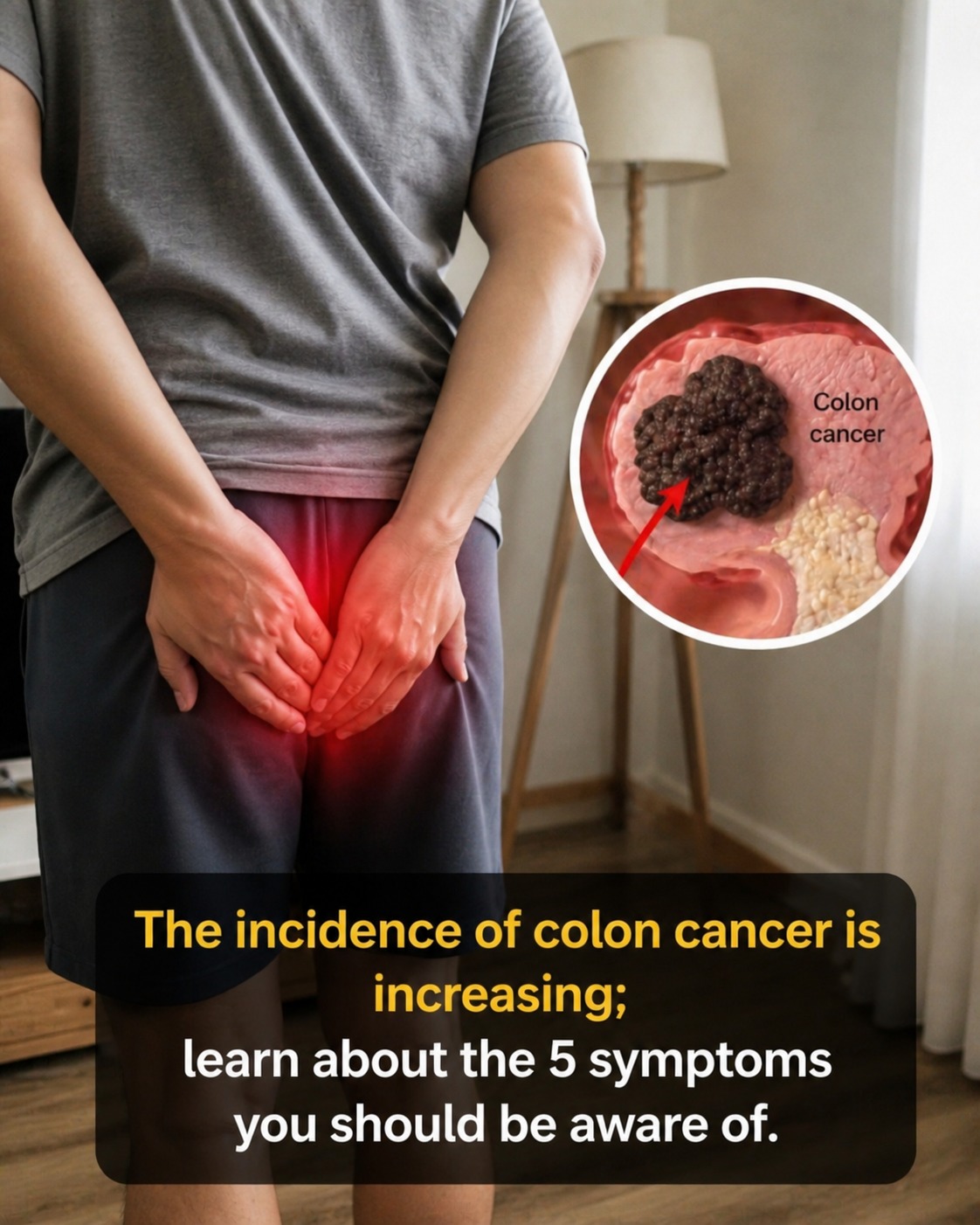
Certain changes deserve attention, especially if they last more than a few days or keep coming back. Here are the five most commonly reported symptoms tied to colon cancer awareness:
- Changes in bowel habits
This includes new or persistent diarrhea, constipation, narrower stools, or that feeling like your bowel doesn’t empty completely. If your usual routine suddenly shifts without an obvious reason like travel or diet changes, it’s worth noting. Studies show these shifts can signal something deeper when they linger.

- Blood in the stool or rectal bleeding
You might see bright red blood on toilet paper or in the bowl, or darker, tar-like stools. Even small amounts shouldn’t be ignored. This is one of the more direct red flags health experts emphasize. - Abdominal discomfort, cramps, or pain
Ongoing belly pain, bloating, or cramping that doesn’t go away can feel like indigestion at first. When it’s persistent or paired with other changes, it’s a signal to pay closer attention. - Unexplained weight loss
Dropping pounds without trying—especially if you haven’t changed your eating or exercise habits—can sometimes point to an underlying issue. It’s not always dramatic, but it’s one of those symptoms that stands out. - Fatigue or unexplained weakness
Feeling unusually tired or weak, even after rest, often ties back to low iron levels from slow blood loss. Many describe it as a different kind of exhaustion that doesn’t improve with sleep or coffee.

The reality is, these symptoms can have many causes, from diet to other digestive conditions. That’s exactly why talking to a doctor is the smart move—they can help figure out what’s really going on.
Common Risk Factors Linked to Colon Cancer
While anyone can develop colon cancer, certain factors may raise the odds. Here’s a quick look at what research highlights:
- Family history of colon cancer or polyps
- Personal history of inflammatory bowel conditions
- Diets high in processed meats and low in fiber-rich foods
- Lack of regular physical activity
- Being overweight or obese
- Smoking or heavy alcohol use
- Age (though rising in younger adults)
Knowing your own background can help you have more productive talks with your healthcare team.