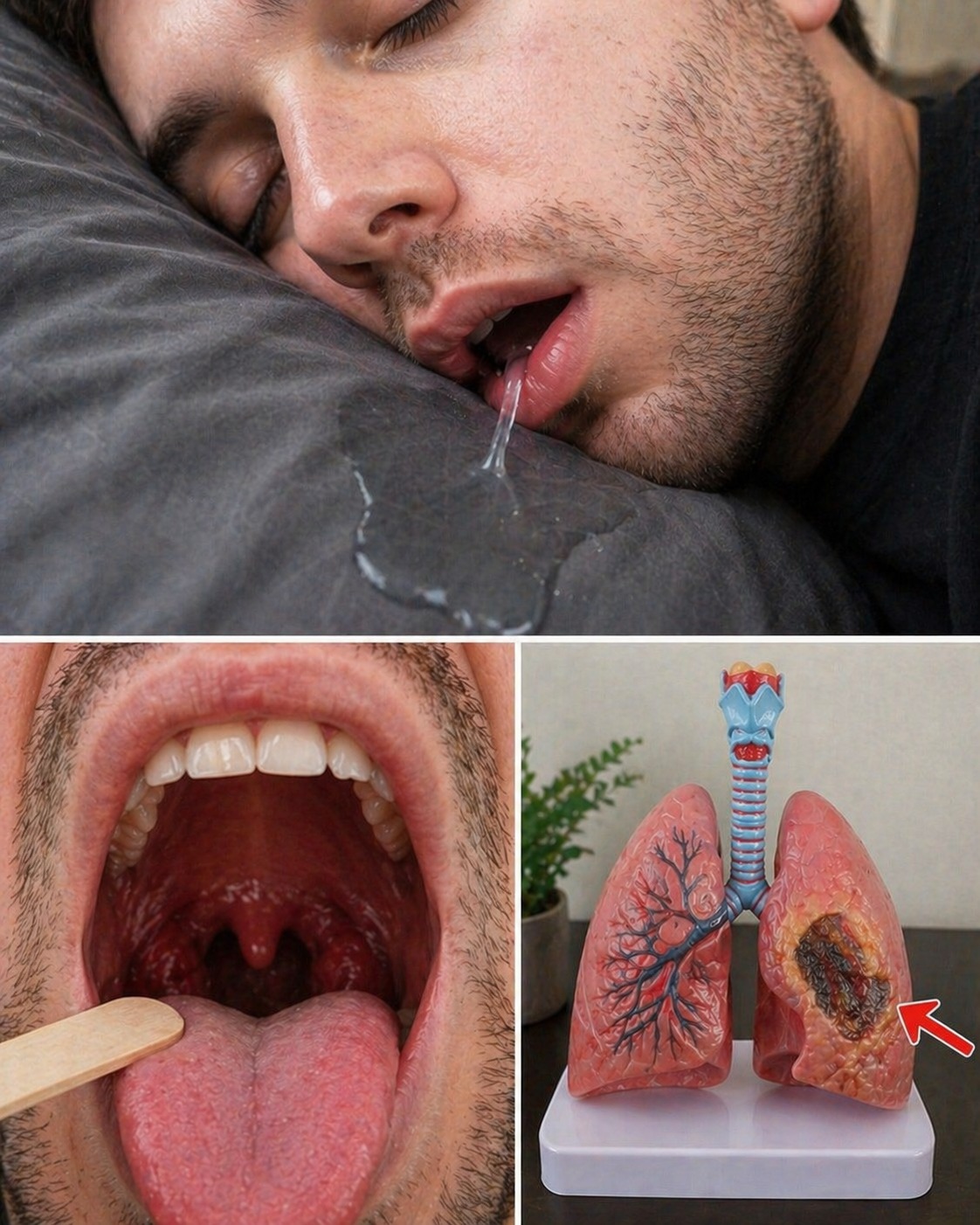
Health professionals often point to several common issues that can lead to excess saliva or mouth breathing while you rest. Here are eight worth knowing about:
- Gastroesophageal reflux (GERD): When stomach acid flows upward, it can irritate the throat and prompt your salivary glands to work overtime as a protective response. Many people notice this connection after eating late or lying flat.

- Chronic nasal congestion or sinus issues: A stuffy nose forces you to breathe through your mouth, and that open-mouth position makes saliva easier to escape. Allergies, colds, or ongoing sinus irritation are frequent culprits.
- Neurological conditions such as Parkinson’s disease: These can affect the muscles used for swallowing and facial control, leading to saliva buildup that slips out during sleep. Studies in neurology journals note this is more common in older adults.
- Bell’s palsy or facial nerve weakness: Temporary or ongoing weakness in the facial muscles can prevent the lips from closing fully at night, allowing saliva to flow.

- Obstructive sleep apnea: When breathing pauses briefly, the mouth often falls open to compensate. Sleep specialists frequently see drooling as a side effect of this common breathing disorder.
- Throat infections or inflammation: Swollen tonsils, sore throat, or lingering infections can make swallowing uncomfortable, so saliva pools and may leak out while you sleep.
- Dental concerns like cavities or gum irritation: Inflammation in the mouth can stimulate extra saliva production as your body tries to protect itself.
- Side effects from certain medications: Some sedatives, antidepressants, or drugs for neurological conditions relax muscles or increase saliva flow, making nighttime drooling more noticeable.
Here’s where it gets interesting—many of these factors overlap. For example, someone with nasal congestion might also experience sleep apnea, doubling the chance of drooling.
Simple Lifestyle Habits That May Help You Wake Up Drier
The best part? You can start testing a few easy adjustments tonight without waiting for a doctor visit. These practical steps focus on supporting your body’s natural nighttime processes and are backed by general sleep hygiene recommendations.
Try these tonight:
- Sleep on your back with your head slightly elevated using an extra pillow—this can reduce mouth breathing and help keep saliva where it belongs.
- Keep your bedroom air moist with a humidifier if the air feels dry, especially during allergy season.
- Avoid heavy meals or acidic foods close to bedtime to minimize reflux triggers.
- Practice good oral care by brushing and flossing before bed so any minor dental irritation doesn’t add to the problem.
- Stay consistent with your bedtime routine—going to sleep and waking at the same time helps regulate saliva production and swallowing reflexes.
But wait—there’s more you can do. Many people also find that addressing nasal congestion with saline rinses or keeping allergies under control makes a noticeable difference within just a few nights.