You sit down after a long day, rub your legs quietly, hoping no one notices how stiff and sore you’ve become, even after doing something as simple as walking to the kitchen. The discomfort lingers, creeping into your bones, making you feel older than you really are. And the worst part? You may think it’s just “aging,” but that belief could be quietly making things worse. Because sometimes, this kind of aching is your body’s way of signaling something deeper… and the surprising answer might not be what you expect.
Why Do Legs and Bones Ache More as We Age?
As we grow older, our bodies naturally change. Muscles lose strength, joints become less flexible, and recovery takes longer.
But here’s the truth most people overlook…
Not all aches are “normal aging.”
Many older adults experience:
• Persistent leg soreness even without heavy activity
• A dull, deep ache in the bones
• Weakness or heaviness in the lower body
• Increased discomfort at night or early morning
Now here’s where it gets interesting.
Research suggests that certain nutrient gaps can amplify these symptoms, especially when the body can no longer absorb nutrients as efficiently as before.
And one vitamin stands out more than the rest.
The Vitamin Most Commonly Linked to Bone and Leg Discomfort

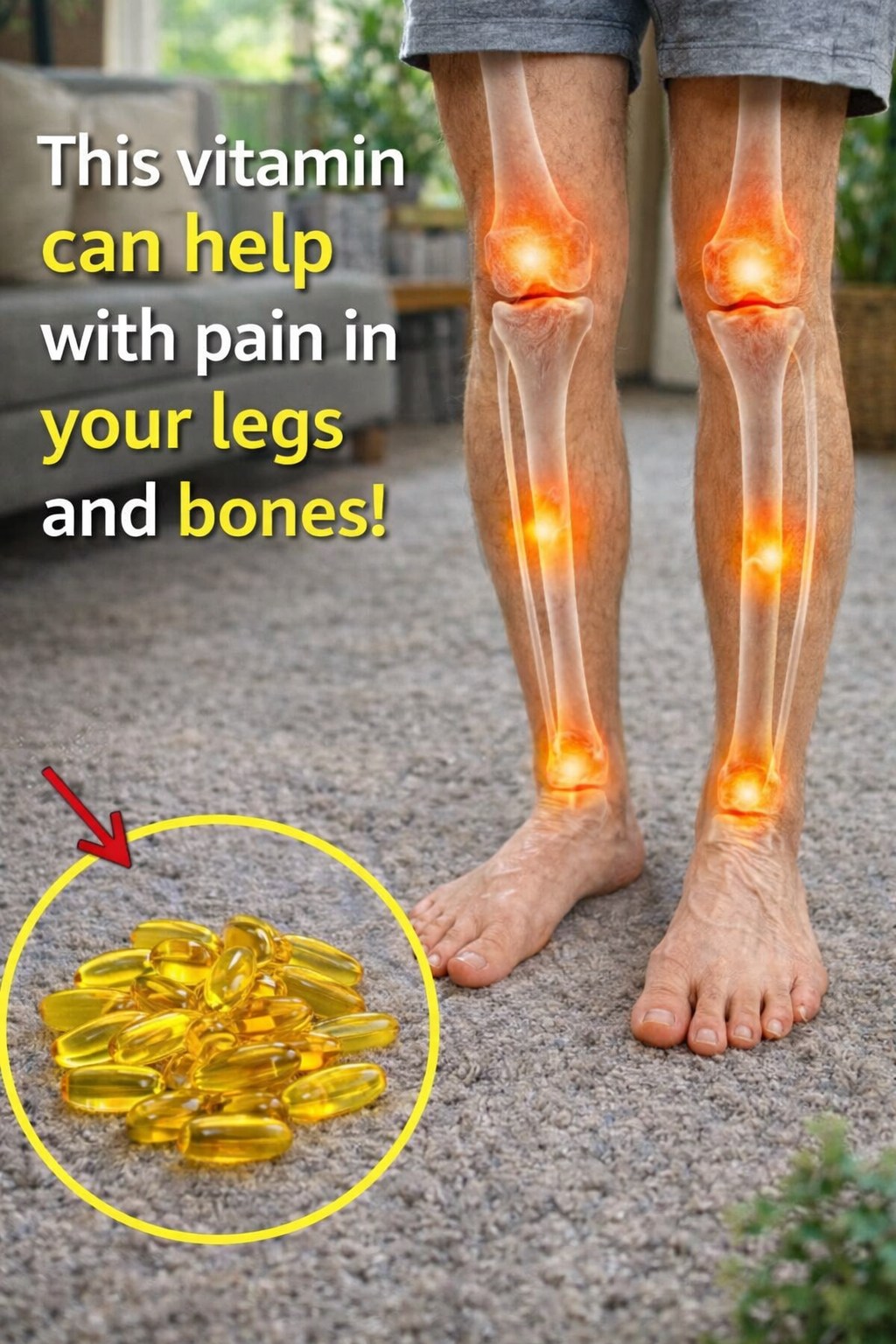
Let’s talk about vitamin D.
Often called the “sunshine vitamin,” it plays a key role in how your body manages calcium and supports muscle function.
When levels are lower than ideal, the body may struggle to maintain strong bones and proper muscle coordination.
And that’s when symptoms may begin to appear.
Some common signs associated with low vitamin D levels include:
• Aching bones especially in legs and lower back
• Muscle weakness or fatigue
• Difficulty climbing stairs or standing up
• Increased sensitivity to cold or damp weather
But that’s not all…
Vitamin D doesn’t work alone. It interacts with calcium, magnesium, and even your immune system.
So when it’s lacking, the effects can feel widespread and confusing.
How to Recognize the Difference Between Normal Aging and Nutrient Gaps

This is where many people get it wrong.
They assume discomfort is unavoidable.
But let’s break it down clearly:
| Symptom Pattern | More Likely Aging | Possible Nutrient Gap |
|---|---|---|
| Mild stiffness after activity |  |
|
| Pain improves with movement | |
|
| Persistent dull bone ache | |
|
| Muscle weakness without exertion | |
|
| Fatigue even after rest | |
Here’s the key takeaway…
If your discomfort feels constant, unexplained, or gradually worsening, it may be worth looking beyond age alone.
Why Vitamin D Deficiency Is So Common Today

You might be wondering…
“If this vitamin is so important, why are so many people lacking it?”
The answer is surprisingly simple.
Modern lifestyle.
Many older adults today:
• Spend more time indoors
• Avoid direct sunlight
• Use sun protection consistently
• Eat diets low in vitamin D rich foods
And as we age, the skin becomes less efficient at producing vitamin D from sunlight.
So even if you do go outside, your body may not produce as much as before.
This creates a quiet gap that builds over time.