At that rate, they might still have three days before the fuel ran out. After that, the inevitable sequence would follow: furniture, then debris, then lumber, then death. They would freeze to death in a house filled with smoke and ash, amid the remains of everything they'd burned in an attempt to survive the cold.
Otto knew, vaguely and contemptuously, that Ingrid lived somewhere underground. He had never seriously considered the possibility because he didn't believe it was possible. Nothing in his presuppositions contemplated the possibility that an underground lair could be more functional than a home. Bedsand headboards
Nothing in his pride allowed him to contemplate the possibility that the fifteen-year-old he'd kicked out of his house knew something he didn't. But now he watched his children wasting away from the cold inside a building that, by every instinct, was a safe haven. Pride becomes meaningless when a child turns gray from hypothermia.
Find out more
Heating, ventilation and air conditioning
Stoves, hobs and ovens
Kitchen and dining room items
On the second day of the storm, Otto made a decision that would save his family and overturn all his certainties. They would leave the unsafe house and attempt to walk to Ingrid's underground shelter, risking their lives on the two-mile journey, because staying there had become the surest route to safety.
By the third day, the decision could no longer be postponed. He'd heard that the Larsen girl had somehow survived in her underground shelter. He couldn't believe anyone could stay warm underground in temperatures of -25°C. But disbelief had become irrelevant. He had no other options. Weather forecast
The walk turned into a nightmare of wind, cold, blindness, and a slow collapse. Otto carried Anna, his four-year-old daughter, wrapped in blankets, her body already weakened by hypothermia. Elsa held the hands of her two middle children, aged six and eight, pulling them forward when they tried to stop.
The three older children, aged 10, 12, and 14, walked on their own two feet, but stayed close together, clinging to Otto's coat to avoid getting lost in the blizzard. The distance was only two miles. Under normal conditions, it would have taken about 45 minutes. In these conditions, it took 90. Every step required effort. Every gust of wind threatened their balance. Every instant exposed faces, fingers, and lungs to a cold so intense it could maim or kill.
Find out more
mobile
Beds
Mobile
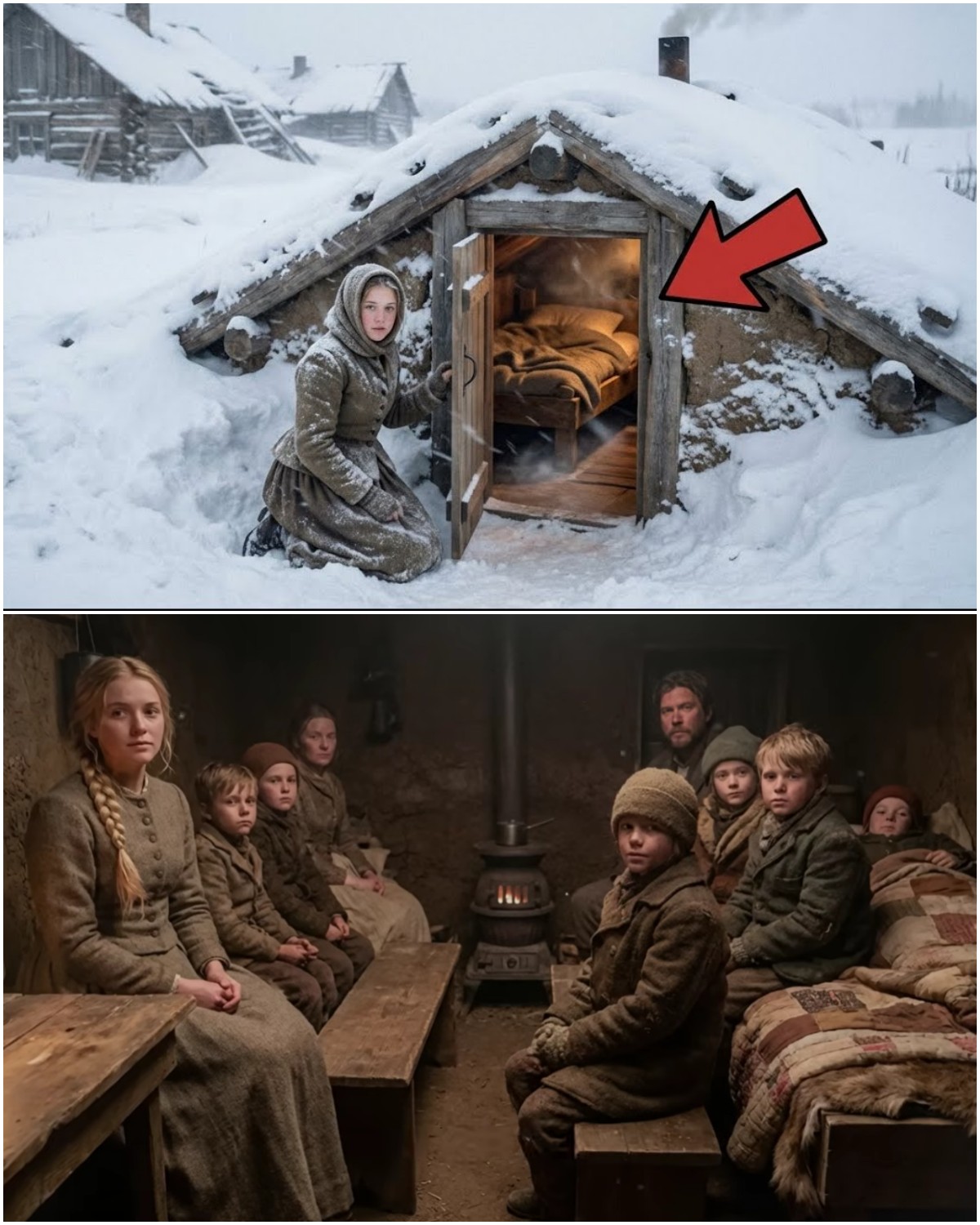
As they approached the site, Otto's face was frozen. Elsa's fingers, even inside her gloves, were numb. All six children were hypothermic to varying degrees. They were literally dying during the two-mile hike between shelters. They found Ingrid's cabin through a combination of memory, luck, and desperation. Otto vaguely remembered it being near a distinctive rocky outcrop. They reached the outcrop, groped through the darkness of the storm, found the entrance ramp almost completely buried in snow, and staggered to the door. He slammed it hard, panicking. Mobilefor the house
Ingrid opened the door, and warm air rushed out. It was only 50°C (122°F) versus -25°C (-13°F), but that 75°C (167°F) difference created visible steam. For the people collapsing in the doorway, it was a lifesaver. Eight frost-covered figures crowded into a 140-square-foot subterranean room and nearly fell over, shivering from the intense cold. Anna was unconscious. Everyone else was at the end of their tether.
Ingrid didn't waste time being surprised or reproachful. She took action. She seated everyone on the heated platform, which was still around 70°C (158°F) thanks to the fire she'd lit earlier for cooking. She immediately built another fire, larger than usual, using more wood to draw as much heat as possible through the tile system. Within 30 minutes, the buried chimney reached its maximum temperature. The platform reached around 85°C (185°F), hot enough to be unmistakably warm. Anna, the youngest and most at risk, was placed on the warmest part and wrapped in blankets. Within an hour, her color began to return. Her confusion eased. Her condition stabilized.
Find out more
Heating, ventilation and air conditioning
Stoves, hobs and ovens
Home furniture
Otto sat on the warm floor and felt the heat rising through the boards. At that moment, he was forced to confront something more humiliating than need: evidence. The hut he had dismissed as a mere hole in the ground maintained a temperature of 10°C even without active heating. The underground pipe system he had dismissed as trivial provided real, tangible warmth. The girl he had kicked out had built a shelter superior to the expensive conventional house in which she had almost watched her children die.
When he finally managed to speak without chattering teeth, he asked the question that follows the collapse of certainties. "How is this possible? Your floor is warm, really warm. In my house, with a constant fire, the temperature never rises above 40°C. In your shelter, with a small fire burning, the base temperature is 50°C, and on this platform it reaches 70°C. How is this possible?"
Ingrid patiently explained the project. The buried tiles channeled the waste heat. The stones stored the heat. The insulation in the ground prevented rapid heat loss. The entire system captured waste heat that would otherwise have been wasted. "I'm not burning extra wood for heat," she told him. "I'm cooking the same amount of food as always. The cooking fumes are still hot, perhaps 300°F, when they enter the tiles. That heat warms the tiles and the surrounding ground. It's free heating, using heat that would otherwise be wasted."
Otto, still trying to translate all this into the language of his own experience, said that the fumes from his stove rose directly up the chimney . Why, then, wasn't his house heated the same way? Fireplacesand stoves
Find out more
Kitchen and dining room items
Mobile
Beds
"Because your exhaust fumes go directly outside," Ingrid replied. "Mine, on the other hand, first travel four meters horizontally through clay tiles. During this journey, they transfer heat to the tiles. Only then do they exit through the chimney. This way, I recover the heat lost from your system."
Part 3
Eight people remained for three days in Ingrid's 13-square-meter cabin, while the blizzard raged. The space was incredibly cramped by normal standards. Adults sat against the walls, while children were stacked on top of each other on the sleeping platform. Everyone was so close together that they could hear each other's breathing and movements. Privacy was gone. Comfort, in any refined sense, was out of the question. Yet they survived, not by miracle, but thanks to a combination of ingenuity and simple physical factors. The underfloor heating system maintained enough heat to make the interior habitable, and the presence of eight people in such a confined, isolated space further raised the temperature. The cabin, usually stable at 10°C, reached 13°C due to body heat combined with the exhaust heat that accumulated under the platform.
During those three days, the contrast between the underground house and the conventional dwellings above ground could not have been more stark. Ingrid's underground room, derided as primitive, was bustling with life. Structures that had seemed appropriate, respectable, and patently superior were collapsing across Elhorn. The blizzard didn't just test architecture. It challenged beliefs about what constituted good shelter, civilization, and intelligence. An above-ground house with walls, a roof, and an exposed stove could still lose heat faster than it produced. An underground house, equipped with clay drainage pipes and a strategically placed fireplace, could retain heat more effectively and with less fuel. The storm turned theory into proof. Weather forecast
When the blizzard finally ended on December 17, those sheltering in bunkers emerged into a city in crisis. Elhorn had been devastated by the storm. Many buildings had collapsed. Three people had died of hypothermia in their homes, elderly people whose homes could not maintain temperatures compatible with survival. Firewood supplies had been consumed at a dizzying rate. Families who thought they were prepared discovered that preparedness, measured by the amount of fuel, meant little if the structure itself was losing heat uncontrollably. The city wasn't simply struggling. Its entire concept of coping with winter had been shaken.
Otto's house told the same story in miniature. When they returned, the temperature inside was 0°C, practically below freezing, despite the building being closed. Ninety percent of the winter's firewood had been consumed. In three days, they had burned enough wood to last three months. The numbers didn't add up. They couldn't afford enough firewood for the entire season at that rate, and even if they had managed to buy more, the house still wouldn't have functioned properly. The problem was structural, not just economic. They had wasted wood in a losing battle against heat loss. Fireplacesand stoves
Standing in front of that house, Otto had to confront what the storm had taught him. The conventional structure he trusted had failed him. The underground construction he had rejected had saved his family. The fifteen-year-old girl he had kicked out of the house, assuming she was merely a burden, knew more than he did about shelter, warmth, and survival. He went to thank her formally and, in doing so, admitted what he needed to admit.
"I was wrong," he said. "About everything. About you, about underground shelters, about underfloor heating, about what makes an adequate shelter. You're smarter than any of us ever realized. That heating system you built is brilliant. Your underground shelter outperformed every house in Elhorn."
Ingrid had every reason to respond bitterly. Otto had put her in the situation that forced her to participate in this experiment. He had judged her harshly, chased her away with minimal resources, and then showed up at her door only when her own family was in ruins. She could have reminded him of every single step of that sequence of events. She could have made it difficult for him to express gratitude. She could have let the humiliation linger unabated. Instead, she responded pragmatically.
"You can learn from this," he said. "If you want, I can help you install underfloor heating in your home. It won't cost much. Just terracotta tiles and labor. The fumes from your stove could heat the sleeping area just as well as mine. It would dramatically reduce fuel costs in the winter."
This wasn't generosity in the sentimental sense. It was generosity dictated by utility. He had learned something concrete, and precisely because it was concrete, it could be replicated. In February 1884, Otto installed underfloor heating under the sleeping area of his home, following Ingrid's design. Clay tiles ran horizontally from the stove flue under the mezzanine, before the smoke escaped through the chimney . The principle was the same as his: don't immediately release the hot fumes; you have to use them first. The result was immediate and tangible. The system reduced heating costs by 60%. The sleeping area remained comfortable with minimal fuel consumption.
The news spread through Elhorn with the typical matter-of-factness found in frontier regions. The girl, named Larsen, had built an underfloor heating system using clay drainage pipes and physics. She had done it for survival, later demonstrating its effectiveness in the worst winter conditions. By spring, six families had asked her for advice on heating systems. She explained the layout of the pipes, the chimney draft, and the principles of heat recovery. At just 15, she had become the local expert on waste heat recovery and efficient heating—not because anyone had given her special training, nor because anyone had intended to empower her, but because she had built something that worked precisely when it mattered most.
She remained in the underground cabin until she was 18, when she could legally register ownership of the land she had occupied. The quarter lot on which she had settled became hers. By then, she had earned enough from consulting and teaching to build a proper home, but when she built it, she did not abandon the principles she had pioneered underground. She incorporated underfloor heating, using the same essential principle she had first made necessary in the cabin. In this sense, the cabin was not simply an emergency shelter for young people. It was the prototype of the permanent home it would later become.
The site itself, once a target of ridicule, has changed its meaning over time. What had seemed like a sign of desperation to neighbors became a demonstration site for a heating method others longed to understand. The underground lair remained associated not with shame, but with technical ingenuity. The lair reportedly still exists as an archaeological site, with the clay tiles still buried 4 meters underground. Modern thermal analyses confirm the system's efficiency: the exhaust heat enters the tiles at around 150°C, drops to around 90°C in the central section, and 65°C at the exit, yet still transfers enough heat along the way to significantly heat the sleeping area without any additional fuel costs.
The significance of the episode lies not only in the struggles of a girl kicked out of her home at 15, though that alone would be compelling. It also lies in the way ancient knowledge and immediate needs came together. Ingrid remembered an idea her father had experimented with long ago, an idea rooted in an ancient tradition of underfloor heating. Faced with abandonment, she translated that remembered principle into materials found on the prairie: clay drainage tiles, local soil, salvaged wooden planks, collected stones, cottonwood poles, sod, and a small iron cooking grate. She made the underground space functional, ensuring that no useful heat was wasted if it could be stored.
The logic behind her project remained simple from start to finish. The heat from cooking fires was already present. Most people viewed hot fumes as something to be disposed of as quickly as possible. Ingrid saw them as a resource to be exploited before releasing them. By channeling those fumes horizontally for 4 meters through a layer of buried clay before letting them escape, she transformed the floor beneath her bed into a radiator and the surrounding earth into a heat reservoir. The result was far from luxurious. The air in much of the den could still only be 10°C. But comfort isn't measured by air temperature alone. A sleeping platform at 21-27°C, heated from below and capable of retaining that heat for hours, can make the difference between a sleepless night and a restful sleep, between reduced stamina and preserved strength. Bedsand headboards
The blizzard made this difference clear to everyone. Expensive conventional heating systems proved ineffective because they relied on the constant burning of fuel inside buildings that lost heat too quickly. Ingrid's system succeeded because it reduced heat loss, stored it in the mass, and harnessed the energy that other systems wasted. Its success, therefore, was no accident. It arose from a better understanding of where heat goes and how long it can be made usable.
The story also has an undeniable social dimension. Ingrid was marginalized not only because she was poor, but also because she was young, a woman, an orphan, and dependent. The adults around her assumed the right to decide her situation, assuming that such authority also implied better judgment. Pastor Henrik, the church members, Otto, and the entire town interpreted her hut primarily based on criteria of decorum and appearance. It seemed inadequate. It seemed degrading. It failed the visual test by which a decent shelter was judged. Yet, when winter imposed its test, the seemingly inadequate shelter proved more effective than the appropriate one. The lesson was humiliating for those who had confused conventional appearance with practical superiority. Weather forecast
Otto's conversion after the blizzard was therefore more than simple gratitude. It was the recognition that he had confused social standing with competence. He had believed that the "right" house, the "right" stove, the "right" way of life would necessarily prove better than a girl's makeshift underground shelter. Instead, the exact opposite happened. He, with his family and his pretensions to domestic authority, risked failing in the fundamental task of keeping his children alive. Ingrid, with nine dollars, a blanket, and the knowledge she had acquired, succeeded.
The same point explains why his subsequent consultation proved important. Once the results were seen, the system was no longer considered eccentric, but rather transferable knowledge. The arrangement of the tiles, the chimney draft , the horizontal distance to be traveled before the vent, the use of stone and earth as thermal mass: these were no longer the tricks of a desperate girl, but the recognizable components of an efficient heating method. The practical culture of the city adapted because necessity rewarded adaptation. The frontier could deride innovation until disaster struck. After the disaster, anything that preserved fuel and life gained authority.
The story's conclusion, then, is not sentimental, but substantial. A girl, kicked out of her home at 15, built an underground shelter with a heated floor using clay drainage tiles and recalling the principle that waste heat could be channeled under a sleeping surface. She demonstrated that the best shelter can be one that combines multiple heating principles into a single coherent system: underground insulation from the ground, thermal storage in stone and compacted soil, and waste heat recovery redirected before being released. Her innovation saved lives when more expensive and conventional heating systems failed. The clay tiles, which many considered primitive, proved to be an ingenious engineering solution. The underground shelter, which many called a mere pit, proved to be a superior winter shelter. And the central fact remained evident even after the storm had subsided and the calculations were made: recovering waste heat is more important than simply burning more fuel.